
The Clinical Importance of Bodywork and Therapies for Horses: A Biomechanical and Comparative Analysis
Equine bodywork and physical therapies are increasingly recognized as essential components of comprehensive horse care. Yet, I still hear common doubts expressed about its imperative place in the horse world. Comments like, "Bodywork is not needed if the movement is correct", or "I prioritize necessities over optional things like physical therapy" or even "I provide enough stretching and work under saddle. My horse doesn't need additional therapy" are all too common. I can't help but believe that there are gross misunderstandings about what bodywork is intended for, and why it really isn't optional for horses that are being ridden.
After all, there is nothing natural about what we do with our horses. We ask them to carry rider weight, something which they were never designed to do. We ask them to carry out tasks and perform moves that their bodies aren't naturally prepared for. And we even keep them in all sorts of places that create changes in the body because let's face it -- horses were not made to stand in box stalls, travel in trailers, or run in round pens.

Much like human athletes, horses are subject to physical stress, musculoskeletal imbalances, and neuromuscular fatigue. Given their role in sport, labor, and recreation, horses often undergo intense physical exertion that predisposes them to mechanical dysfunction and chronic injury if not properly managed. This article explores the physiological, biomechanical, and clinical rationale behind equine bodywork and therapeutic interventions, drawing comparisons to human athletic medicine, and integrating principles from physics and kinematics to emphasize the necessity for proactive care. In other words, here's proof on why bodywork for the riding horse really isn't "optional".
The Equine Athlete: A Complex Biomechanical System
Horses, like human athletes, are intricate biomechanical systems. Their movement depends on the coordinated function of skeletal alignment, muscular strength, joint integrity, and neural control. An average horse typically weighs between 1,000–1,300 pounds and must move its mass with both grace and force, often under additional load such as a rider, tack, or pulling equipment.

From a physics standpoint, Newton’s Second Law (F = ma) is especially pertinent. A horse accelerating from a standstill to a canter under a 165 lb rider must generate exponentially more force than when unburdened. This increased mechanical load amplifies stress on the limbs, spine, and supporting soft tissue. In humans, professional sprinters, NFL players, and Olympic trainees undergo sports massage and physical therapy to offset precisely these types of repetitive strain and muscle loading. Horses are not so different. Though they lack the ability to verbalize discomfort, they require physical therapy and bodywork not only for recovery, but also for the early detection and mitigation of micro-injuries.
Load Transfer and Compensation Patterns
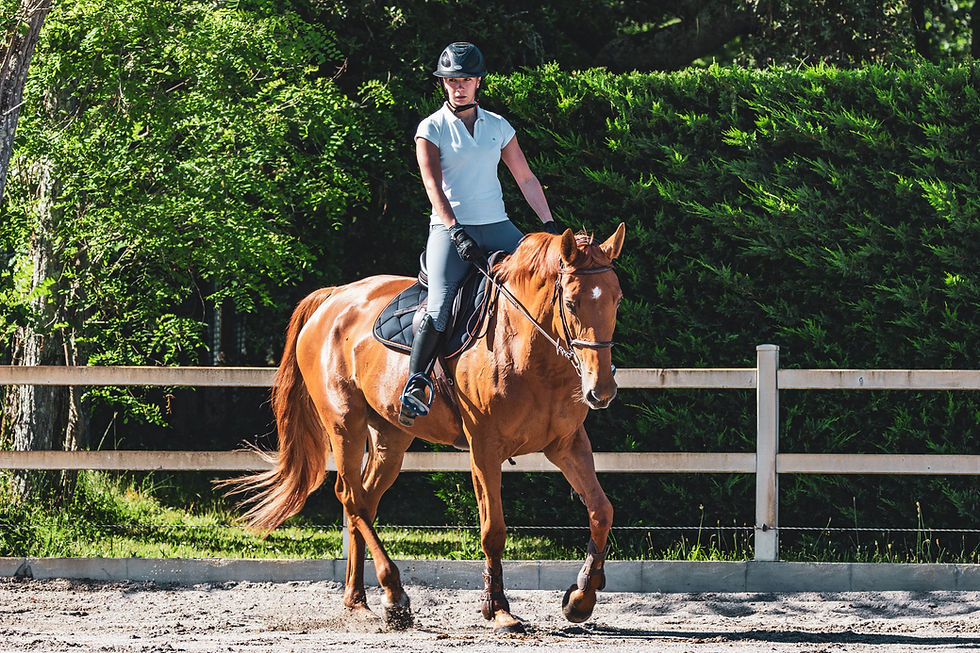
Horses distribute weight across four limbs; however, even minor deviations in gait or symmetry can disrupt this balance. For example, if one hind limb is slightly sore or weak, the horse may shift weight to the contralateral limb or forelimbs, creating asymmetrical loading. Over time, this creates stress concentrations in joints, tendons, and the thoracolumbar spine.
In human athletes, such compensation often results in iliotibial band syndrome, Achilles tendinopathy, or patellofemoral pain syndrome. In horses, it may present as suspensory ligament desmitis, sacroiliac joint dysfunction, or kissing spines. Without bodywork interventions such as myofascial release, mobilization, or anti-inflammatory therapies, vascular therapy, or chiropractic adjustments, these compensatory patterns can escalate into performance-limiting and even career-ending injuries.

Equine bodyworkers identify fascial restrictions, muscular adhesions, or areas of reduced range of motion, thereby preventing chronic maladaptations. Modalities such as massage therapy, trigger point therapy, and stretching promote neuromuscular balance and proprioceptive realignment, restoring optimal movement patterns.
The Role of Kinematics in Equine Locomotion
Kinematics, the study of motion without regard to the forces involved, reveals that horses exhibit complex gaits involving coordinated limb movement, spinal flexion, and head–neck positioning. High-speed video analysis shows that even small deviations in stride length or joint angle can indicate underlying discomfort.
For example, during a trot, the stifle and hock joints of the hind limbs flex in unison to provide thrust. If one joint shows reduced flexion, the resulting kinematic chain affects the hip, pelvis, and eventually the lumbar spine. Without intervention, the horse may develop a shortened stride, decreased propulsion, and reduced engagement — key markers of athletic decline.

Human biomechanics literature supports this approach: kinematic assessments are standard in diagnosing conditions such as anterior cruciate ligament (ACL) dysfunction or gait abnormalities in runners. Horses benefit from the same analytical perspective, and bodywork helps maintain the symmetry and amplitude of joint motion necessary for optimal gait cycles.
The Influence of Added Load
Load-bearing has profound implications on equine biomechanics. A rider’s weight is not merely a static load; it introduces dynamic oscillations as the horse moves, altering the center of mass and affecting joint kinetics. Poor rider balance or poorly fitted tack introduces asymmetric loading, which can lead to muscle strain, especially in the trapezius, longissimus dorsi, and gluteal regions.
From a physics standpoint, torque (τ = r × F) illustrates how a force applied at a distance from the fulcrum (e.g., the horse’s spine) can increase stress. A rider sitting unevenly creates torque along the spine, which the horse’s musculature must counterbalance. Over time, this leads to unilateral muscle hypertrophy, soft tissue soreness, and vertebral misalignments — all preventable or manageable through regular bodywork.

In human athletes, similar imbalances such as carrying an uneven backpack or incorrect form during weightlifting — result in scoliosis, spinal compression, and asymmetrical muscle development. Regular physiotherapy and corrective exercises are used to rebalance musculature and maintain posture; horses require no less.
Teeth, Jaw Tension, and Postural Chain Reactions
One often overlooked source of biomechanical dysfunction in horses stems from the mouth. Equine dentistry is critical, as uneven wear, sharp enamel points, or TMJ restrictions interfere with bit acceptance and jaw relaxation. The horse’s tongue and jaw connect via the hyoid apparatus to the sternum and scapula through muscular chains (e.g., the omohyoid and sternohyoid). Thus, dental discomfort translates into tension in the neck, shoulders, and even the forelimbs.

In human athletes, temporomandibular joint (TMJ) dysfunction can cause cervicogenic headaches, postural imbalance, and trapezius strain. Similarly, horses with unaddressed dental issues exhibit head tossing, bracing against the bit, or shoulder tightness — behaviors often misinterpreted as behavioral rather than physiological.
Manual therapy targeting the poll, jaw, and associated fascial lines restores neuromuscular harmony, allowing for proper bit contact and freedom of movement. This type of intervention requires trained equine bodyworkers who understand the interplay between oral biomechanics and global posture.
Stress, Nervous System Balance, and Recovery
Equine athletes experience not only physical but also psychological stress. The autonomic nervous system governs physiological states through the sympathetic (“fight or flight”) and parasympathetic (“rest and digest”) branches. Chronic stress from pain, environmental pressures, or poor recovery keeps the horse in a heightened sympathetic state, impeding tissue repair and immune function.
Massage therapy, craniosacral therapy, and acupressure stimulate parasympathetic responses, lowering heart rate, increasing gastrointestinal motility, and reducing cortisol levels. In human sports medicine, similar effects are observed — post-competition massage reduces delayed-onset muscle soreness (DOMS), promotes circulation, and enhances sleep quality.

By promoting parasympathetic dominance, equine therapies accelerate recovery, optimize performance, and enhance well-being. Horses subjected to regular bodywork demonstrate improved coat condition, behavioral calmness, and fluidity of motion.
Preventative Care and Long-Term Athletic Longevity
Just as human athletes follow strict regimens of maintenance therapy — including physiotherapy, sports massage, strength training, and flexibility exercises — equine athletes require consistent interventions to maintain longevity. Early intervention through bodywork allows detection of subclinical issues before they manifest as lameness or behavioral resistance.
Preventative bodywork in young or aging horses can delay joint degeneration, maintain elasticity in tendons, and prevent fibrosis in muscle fascia. Modalities like pulsed electromagnetic field therapy (PEMF), laser therapy, or thermography-guided massage further enhance diagnostic and therapeutic outcomes.
Conclusion
The integration of bodywork and physical therapy into equine management is not a luxury but a clinical necessity. Horses, as biomechanical systems subjected to intense physical demands, benefit enormously from the same therapeutic principles applied to human athletes. Using physics and kinematics, we see clearly how load, stress, and structural asymmetry impair equine movement and health. Comparisons with human sports medicine underscore the need for a multidisciplinary approach that includes bodywork, dental care, saddle fitting, and rider education.
Proactive equine therapy preserves not only the athleticism and function of the horse but also its overall well-being and longevity — a goal shared by every conscientious owner, rider, and veterinarian.


Comments